What Is the Best Wrapping Paper for Food in 2026?
Choosing the best Wrapping Paper For Food in 2026 requires more than attractive patterns. The right paper must protect food, preserve flavor, and support responsible disposal. It may touch warm pastries, oily sandwiches, fresh fruit, or frozen snacks. Each use creates different demands.
Dr. Susan Selke, a packaging sustainability expert, has emphasized, “Packaging is a system, not just a material.” Her point matters here. Paper alone does not determine performance. Fiber strength, grease resistance, moisture control, printing ink, coatings, and end-of-life options all influence the result. A thin kraft sheet may suit dry cookies. It can fail quickly around hot fried food. A coated paper may resist oil better. However, the coating can complicate recycling or composting.
That trade-off deserves honest attention. “Eco-friendly” is not automatically the best choice. A paper that leaks can waste food and create more packaging. A heavier material may perform better, but it also uses more resources. Real testing matters. Place a hot sandwich inside the paper, wait ten minutes, and inspect the seams. Check for softened areas, transferred ink, or oily stains. Food-contact suitability should also be verified for your market and intended temperature.
This guide compares common paper types for 2026. It considers safety, durability, appearance, cost, and disposal. Some answers remain imperfect. The best option depends on the food, serving time, and local waste system.
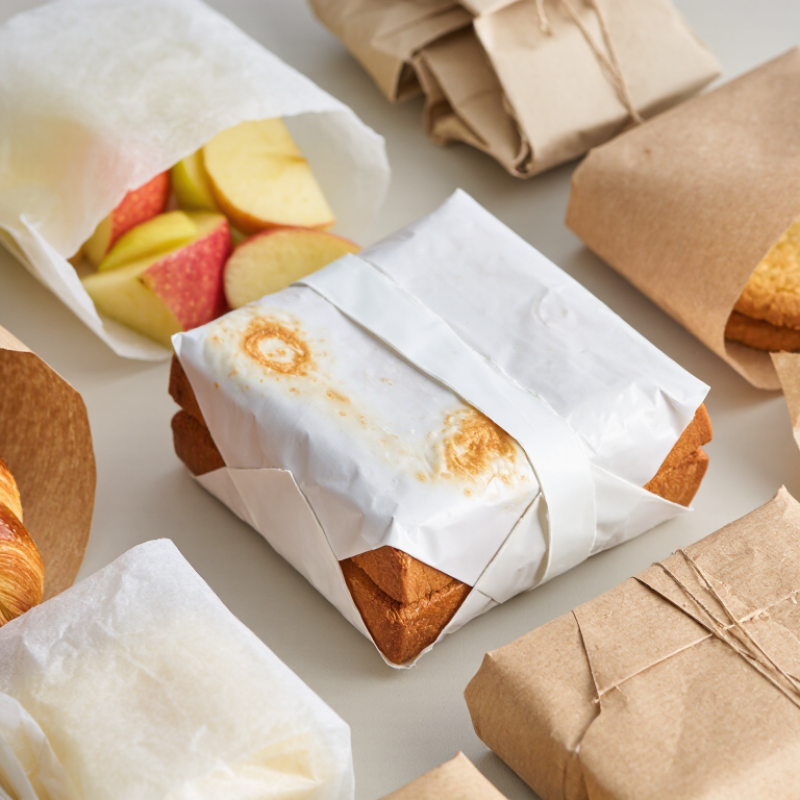
Food-Wrapping Materials and Their Main Uses in 2026
What Is the Best Wrapping Paper for Food in 2026?
The best food-wrapping material depends on moisture, grease, heat, and storage time. No single paper performs perfectly.
Parchment paper works well for baking, roasting, and separating sticky foods. Its smooth surface releases cookies and vegetables with little added oil.
Waxed paper suits cold sandwiches, cheese, and dry snacks. It should not line hot ovens because the coating may soften or smoke.
Grease-resistant paper is practical for burgers, pastries, and takeaway portions. Silicone-coated paper offers stronger release performance, but its coating can complicate recycling.
Aluminum foil provides an excellent barrier against light, air, and moisture. It protects roasted food and leftovers, although it should not enter a microwave.
Cellulose film can display fresh produce clearly, while compostable versions often need controlled industrial facilities. “Compostable” is not automatically home-compostable.
The OECD’s Global Plastics Outlook reported that packaging created about 40% of global plastic waste in 2019. UNEP’s 2023 Turning off the Tap report also identified packaging as a major source of single-use plastic pollution.
These figures support lighter, simpler materials, but recycling claims still need careful checking. A useful kitchen test is simple: wrap a warm, greasy pastry and inspect the paper after ten minutes.
If oil reaches the outer surface, the material is underperforming. I still find that moisture often defeats sustainable-looking paper.
Small labels matter.
Safety Standards for Paper That Touches Food
What Is the Best Wrapping Paper for Food in 2026?
Safety Standards for Paper That Touches Food
The best food wrapping paper is not chosen by color, softness, or recycled content alone. It must be designed for direct food contact. In the United States, FDA rules 21 CFR 176.170 and 176.180 address paper used with wet, fatty, and dry foods. These rules consider chemical migration into food. That detail matters when wrapping warm pastries or oily fried items.
In Europe, Regulation (EC) No. 1935/2004 requires food-contact materials to remain safe during normal use. Regulation (EC) No. 2023/2006 also requires controlled manufacturing practices. Paper suppliers should provide a declaration of compliance, migration-test results, and details about coatings, inks, adhesives, and recycled fibers. A professional certificate is useful. It is not magic.
The FDA’s 2024 PFAS update states that grease-proofing PFAS substances covered by previous authorizations are no longer being sold for food packaging in the United States. This reflects stronger scrutiny of fluorinated coatings. The Food Packaging Forum has also reported that paper and board can contain intentional additives and non-intentionally added substances. Therefore, “compostable” does not automatically mean food-safe. I would check the intended food type, contact time, and temperature before use. A clean-looking sheet can still be unsuitable. Sometimes, the packaging claim is clearer than the testing evidence.
Comparing Greaseproof, Waxed, Parchment, and Kraft Paper
Greaseproof, waxed, parchment, and kraft paper behave differently around food. Greaseproof paper suits pastries, fried snacks, and sandwiches with moderate oil. Its dense fibers slow grease without adding a heavy coating. However, wet fillings can soften it quickly. I have seen tomato-rich sandwiches stain through after several minutes.
Waxed paper offers stronger moisture and grease resistance. It works well for chilled foods, candy, and oily portions. It should not enter an oven unless the supplier clearly confirms heat resistance. Parchment paper performs better under heat because its treated surface supports release and baking. It handles butter, sauces, and roasted foods more reliably, but usually costs more. Kraft paper provides strength and a natural texture. Untreated kraft remains absorbent, so it fits bread, dry snacks, and secondary wrapping better than juicy foods.
The material choice also reflects packaging trends. Smithers’ paper packaging market analysis places global paper packaging above US$250 billion in 2023, with food applications driving continued demand. A 2024 report from the Food Packaging Forum emphasizes that coatings can change recyclability and chemical migration performance. “Paper” is not one safety category.
Test the real food. Briefly.
Check temperature, contact time, oil level, and coating instructions. A recyclable-looking wrap may perform poorly with steam. I would choose parchment for hot, oily food; greaseproof for short-term bakery service; waxed paper for cool, moist portions; and kraft for dry foods or outer protection. None is perfect.
What Is the Best Wrapping Paper for Food in 2026? — Comparing Greaseproof, Waxed, Parchment, and Kraft Paper
| Paper Type |
Best Food Uses |
Grease Resistance |
Moisture Resistance |
Heat Performance |
Oven Safety |
Recyclability Considerations |
Overall Best For |
| Greaseproof Paper |
Sandwiches, pastries, baked goods, fried foods, and food-service liners. |
High |
Low to moderate |
Suitable for wrapping warm food; performance depends on the product specification. |
Not automatically oven-safe. Use only when the packaging is specifically labeled for oven use. |
Usually paper-recyclable when clean and free from food residue. Recycling rules vary by local facility. |
Everyday wrapping where oil and butter resistance are important. |
| Waxed Paper |
Cold sandwiches, confectionery, cheese, fruit, and short-term food separation. |
High |
Moderate to high |
Useful for cold or room-temperature foods; wax can soften or melt when exposed to high heat. |
Generally not suitable for conventional oven use unless expressly labeled otherwise. |
The wax coating can prevent standard paper recycling in some systems. Check local guidance before disposal. |
Cold-food wrapping and moisture protection without oven heating. |
| Parchment Paper |
Baking, roasting, steaming packets, lining trays, and separating delicate foods. |
Very high |
Moderate |
Designed for high-temperature cooking; common products are rated for approximately 425°F to 450°F (218°C to 232°C), but the package rating must be followed. |
Yes, when the stated temperature limit is observed. Do not allow it to touch heating elements or open flames. |
Often recyclable only where accepted by the local paper program; food contamination and silicone coatings may affect acceptance. |
Cooking and baking applications requiring reliable release and heat resistance. |
| Kraft Paper |
Dry goods, bakery bags, sandwiches, takeout packaging, and outer wrapping. |
Low to moderate |
Low unless treated or laminated |
Handles ordinary room-temperature use; untreated paper can weaken with hot oil, steam, or heavy moisture. |
Not generally oven-safe unless a specific food-grade product carries an oven-use rating. |
Plain, clean kraft paper is commonly recyclable or compostable where accepted. Coatings, laminates, ink, and food residue can change disposal options. |
Dry foods, presentation, and packaging where strength and a natural paper appearance matter. |
Choosing Wrapping Paper for Different Types of Food
What Is the Best Wrapping Paper for Food in 2026?
Choosing wrapping paper should begin with the food, not the package’s appearance. For dry pastries, bread, and cookies, uncoated food-contact paper allows airflow and helps prevent sogginess. A 2024 UNEP Food Waste Index report estimated that 1.05 billion tonnes of food were wasted in 2022. Better wrapping cannot fix every cause, but it can protect texture during short storage.
Greasy foods need grease-resistant paper, especially fried chicken, roasted vegetables, and buttery pastries. For sandwiches or sliced fruit, use paper with a suitable moisture barrier. Wet foods can soften ordinary paper within minutes. I have seen this happen with warm noodles and thin wrapping. Use a sealed food container instead when leakage is likely.
Cold meat and cheese require clean, food-grade wrapping and prompt refrigeration. The USDA advises refrigerating perishable foods within two hours, or one hour in hot conditions. Paper is not a substitute for temperature control. WHO reports about 600 million foodborne illness cases globally each year, so hygienic handling matters as much as material selection. The FDA also requires food-contact substances to be suitable for their intended use. Check that statement carefully. “Natural” does not automatically mean safer. I still overwrap some foods, wasting material without extending freshness. That is worth reconsidering.
What Is the Best Wrapping Paper for Food in 2026?
Choosing wrapping paper for different types of food
The chart compares common paper-based food-wrapping materials using a practical suitability score from 1 to 5. Parchment paper is generally the most versatile choice for baked goods and greasy foods, waxed paper works well for short-term cold storage, freezer paper is designed for frozen portions, and uncoated paper is best limited to dry, low-grease foods. Always follow the temperature and food-contact instructions printed on the packaging.
Environmental and Practical Factors in Food-Wrapping Selection
What Is the Best Wrapping Paper for Food in 2026?
Environmental and Practical Factors in Food-Wrapping Selection
The best food wrapping paper balances safety, performance, and environmental impact. It should resist grease without transferring unwanted substances to food. For sandwiches, bakery items, and dry snacks, uncoated or lightly coated paper can work well. Hot, oily foods need stronger protection. Otherwise, the paper may soften, tear, or stain the container beneath it.
In professional kitchens, I have seen attractive packaging fail during delivery. A thin sheet looked sustainable, but leaked sauce within minutes. This experience shows why real use matters more than appearance. Choose food-contact paper with clear safety information from the supplier. Recycled content can reduce resource use, although it should still meet food-contact requirements. Compostable paper sounds ideal, but it may require commercial composting facilities. Local waste systems often cannot process it properly. That detail is easy to miss.
Tips: Match the paper to the food. Use grease-resistant paper for fried items. Use breathable paper for crisp pastries. Avoid wrapping steaming food tightly, because trapped moisture ruins texture. Check disposal instructions before buying large quantities. Test a small batch first. It saves waste.
No material is perfect. Paper may use fewer fossil resources, yet its production still consumes water and energy. Reusable containers can perform better for repeated service, but cleaning also requires resources. A practical choice considers the food, storage time, transport conditions, and available disposal system.




 Jimmy
Jimmy Eric
Eric