Leave Your Message

How to Choose the Best Wrapping Paper for Food?

Choosing the right Wrapping Paper For Food involves more than color, texture, or attractive branding. The paper touches meals directly, so its safety, strength, and intended use deserve careful attention. A crisp sandwich may release oil within minutes. Warm pastries can create steam. Saucy foods may test the paper’s coating quickly. These small details often reveal whether a material suits real food service conditions.

Experienced food businesses usually check the manufacturer’s product information before purchasing. Look for clear details about food-contact suitability, temperature limits, grease resistance, moisture performance, and recycling instructions. Paper designed for dry bakery items may not perform well with fried chicken or fresh fruit. A paper that feels thick may still tear when folded around a hot, oily meal. Practical testing helps. Wrap one typical product, leave it for the expected serving time, and inspect leakage, tearing, odor, and surface changes.

Appearance still matters, but it should support function rather than hide weaknesses. Uncoated paper may offer a natural presentation, while treated paper can improve resistance against oil or moisture. However, coatings vary, and environmental claims should be verified through reliable documentation. I would not choose based on a vague “eco-friendly” label alone. That shortcut sounds appealing, but it can mislead. The best decision balances food safety, performance, customer experience, storage needs, and responsible disposal. No wrapping paper is perfect for every menu. Testing the actual food remains the most honest guide.
How to Choose the Best Wrapping Paper for Food?

Understanding Food Wrapping Paper Types and Their Uses

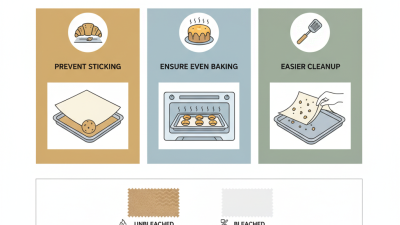
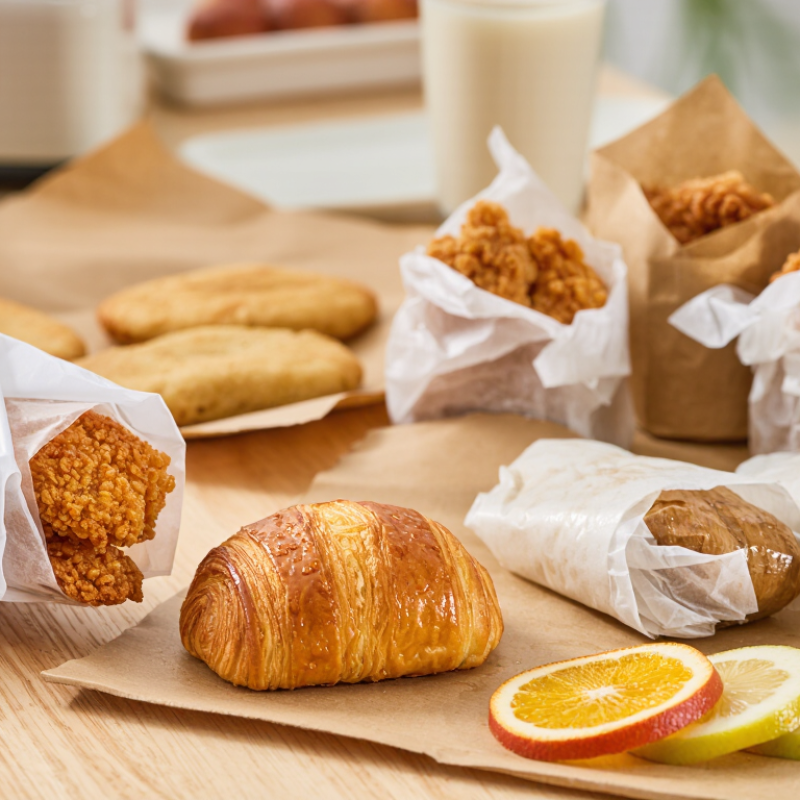
Choosing food wrapping paper starts with the food, not the package. Greaseproof paper suits pastries, sandwiches, and fried snacks because it slows oil migration. Parchment paper handles baking heat and releases food cleanly. Waxed paper resists moisture, but it should not enter an oven unless the manufacturer confirms it is heat-safe. Paperboard works well for dry foods, while coated paper supports wetter products. Each type solves a different problem.

Smithers’ 2024 paper packaging analysis estimates that global paper packaging demand will continue growing through 2028, driven partly by food and takeaway applications. That growth does not make every paper suitable for direct contact. Look for food-contact statements, grease resistance, and temperature limits. A plain recycled sheet may appear sustainable, yet inks, adhesives, or unsuitable coatings can affect its use. The material alone tells only part of the story.

A simple practical check helps. Wrap a warm, oily item for ten minutes. Watch for leaks, softening, or transferred color. For chilled foods, test moisture buildup instead. I often see “eco-friendly” used too loosely. Compostable wrapping may need specific collection conditions, and local facilities differ. This is easy to overlook. Packaging performance also depends on folding, sealing, storage time, and food temperature. No paper wins every application. Rechecking the choice after real kitchen handling remains worthwhile.
Checking Food Safety, Materials, and Certification Standards

How to Choose the Best Wrapping Paper for Food?

Food wrapping paper must protect meals without transferring unsafe substances. The WHO and FAO estimate that contaminated food causes about 600 million illnesses and 420,000 deaths globally each year. That risk makes material selection more than an appearance decision. Check whether the paper is designed for direct food contact. Ordinary craft paper may contain unsuitable dyes, adhesives, recycled fibers, or surface treatments.

Look for a clear compliance statement and migration-testing evidence. In the United States, suppliers should reference applicable FDA food-contact requirements. In Europe, materials should align with Regulation (EC) No 1935/2004 and good manufacturing practice rules. Certification under systems such as ISO 22000 or packaging-material standards can support supplier control. It does not replace product-specific testing. Ask for documentation covering oil, moisture, acidity, heat, and intended contact time. Hot fried food needs stronger evidence than dry bread.

Read the details.

A practical check is simple. Rub the paper’s printed side with a clean, damp cloth, then inspect for color transfer. This is not a laboratory test, but it can reveal poor surface performance. I would also question vague claims like “eco-friendly” or “food safe” without test conditions. Even certified materials can fail when used beyond their temperature or storage limits. Sometimes, the safest choice is less attractive paper with better traceability and sealed packaging. Mistakes happen when paperwork looks impressive, but the actual wrapping process is ignored.

Matching Paper Properties to Different Foods and Storage Conditions

How to Choose the Best Wrapping Paper for Food?

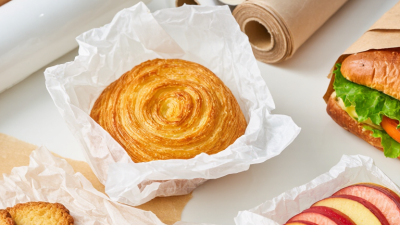
The right wrapping paper depends on the food, storage time, and temperature. Dry bread, cookies, and sandwiches usually need breathable paper that limits surface moisture. Excess moisture can soften crusts and make paper cling. For oily pastries, choose grease-resistant paper with strong folding strength. A weak sheet may tear when lifted.

Cold storage changes the choice. Paper used in a refrigerator should resist moisture and remain flexible. For freezer storage, select paper designed for low temperatures, then add a tight outer layer if the food may dry out. Fatty foods need a reliable barrier, while acidic foods require materials tested for direct food contact. Hot food also deserves care. Steam can weaken ordinary paper quickly. Let food cool slightly before wrapping it.

Small details matter.

Check the paper’s food-contact statement, temperature range, and intended use. Packaging specifications are more dependable than appearance alone. A glossy surface does not always mean better protection. In practice, I would test one wrapped portion overnight before packing a large batch. Look for leaks, odor transfer, sticking, and paper fibers on the food. This step can reveal a poor match early. I once assumed thicker paper was safer, but it trapped steam and damaged a crisp pastry. Thickness helps, yet performance depends on the complete barrier design and storage condition.

How to Choose the Best Wrapping Paper for Food?

Water activity (aw) indicates how much unbound water is available in food. Foods with higher aw generally need stronger moisture-resistant wrapping, while low-aw foods often need better oxygen and light protection to preserve crispness, flavor, and fats. Values shown are typical ranges and may vary by recipe and storage conditions.

Comparing Grease Resistance, Moisture Protection, and Heat Tolerance

Choosing food wrapping paper requires more than judging its thickness or appearance. Grease resistance is often measured with the TAPPI T559 kit test, which uses ratings from 1 to 12. Higher numbers generally indicate stronger resistance to oils and fats. For fried chicken, buttery pastries, or cheese, aim for a high rating and test the actual food. A paper can pass laboratory testing yet develop translucent grease spots after ten minutes. Real use is messier.

Moisture protection needs separate attention. TAPPI T441 measures water absorption through the Cobb60 value, reported in grams per square metre. Lower absorption usually supports better protection against sauces, condensation, and wet fillings. However, excessive moisture can soften paper fibers and weaken folds. Heat tolerance is equally practical. The FDA Food Code 2022 identifies 57°C (135°F) as the minimum hot-holding temperature for many foods, while USDA FSIS recommends reheating leftovers to 74°C (165°F). Wrapping paper should tolerate the food’s temperature, contact time, and steam exposure, not just a short heat test. Test it hot. Check the fold.

Smithers’ 2023 report, The Future of Sustainable Food Packaging to 2028, highlights the industry’s shift toward fiber-based formats with stronger barrier performance. Yet barrier coatings may change recyclability and handling behavior. Ask suppliers for grease, Cobb60, heat, and food-contact test results. Then repeat a small kitchen trial. A perfect specification can still disappoint in practice.

How to Choose the Best Wrapping Paper for Food? - Comparing Grease Resistance, Moisture Protection, and Heat Tolerance
Wrapping Paper Type Grease Resistance Moisture Protection Typical Heat Tolerance Best Food Applications Main Limitations
Uncoated Kraft Paper ★★☆☆☆
Low
★☆☆☆☆
Very low
Up to about 100°C Dry bakery items, sandwiches with low-fat fillings, bread, and produce Absorbs oil and water quickly; can soften, stain, or tear when exposed to wet foods
Greaseproof Paper ★★★★☆
High
★★★☆☆
Moderate
Up to about 150°C Pastries, cookies, fried snacks, and moderately oily foods Not fully waterproof; performance decreases with prolonged contact with sauces or heavy oil
Wax-Coated Paper ★★★★☆
High
★★★★☆
High
Generally below 60°C Cold sandwiches, confectionery, cheese, and chilled takeaway foods Wax may soften or melt with hot food; generally unsuitable for ovens, grills, and direct heating
Polyethylene-Coated Paper ★★★★★
Very high
★★★★★
Very high
Typically up to 100–120°C Wet or greasy takeaway foods, wraps, burgers, and foods requiring stronger leak protection Heat limits depend on coating thickness and construction; not automatically suitable for oven use
Parchment Paper ★★★★★
Very high
★★★☆☆
Moderate
Commonly up to 220°C Baking, roasting, hot pastries, fish, vegetables, and greasy foods Usually not designed for long-term liquid storage; must remain within the stated temperature limit
Silicone-Coated Paper ★★★★★
Very high
★★★★☆
High
Often up to 220°C Oven baking, roasting, sticky confectionery, and foods requiring non-stick release More expensive than basic paper; exact temperature performance depends on the silicone coating and paper base
Aluminum-Foil Laminated Paper ★★★★★
Very high
★★★★★
Very high
Often suitable above 200°C Hot, greasy, or aromatic foods; roasting, grilling, and extended heat retention May not be microwave-safe; avoid contact with highly acidic or salty foods unless the construction is designed for it
Selection guide: Choose greaseproof, parchment, or silicone-coated paper for oily foods; choose coated paper or foil-laminated paper when leak prevention is important; and use parchment or silicone-coated paper for oven applications. Actual performance varies with paper weight, coating, food temperature, contact time, and the manufacturer’s food-contact and temperature instructions.

Evaluating Sustainability, Cost, and Practical Performance

Choosing food wrapping paper requires more than checking its recycled content. In real packing trials, paper must resist grease, moisture, tearing, and heat without sticking to food. Test it cold and warm. A wrap that leaks can increase waste, cleaning time, and customer complaints.

The OECD’s Global Plastics Outlook reports that packaging created about 40% of global plastic waste in 2019, strengthening the case for practical fiber-based alternatives. However, paper is not automatically sustainable. Coatings, adhesives, inks, and food contamination can affect recycling options.

Cost should include more than the price per roll. Measure usable sheets, packing speed, storage space, disposal fees, and rejected products. Thinner paper may reduce material use, yet it can tear during folding and require double wrapping. Costs hide there.

A basic trial should record leakage after 30 minutes, tearing during handling, and performance after refrigeration. These details expose weaknesses that supplier claims may overlook.

The FAO’s State of Food and Agriculture 2023 estimates that 13.2% of food was lost between harvest and retail in 2021. Better wrapping can help protect food, but excessive material can create another burden.

Sustainability claims also need evidence. Ask for fiber sourcing information, recycling guidance, and test results for grease resistance. Compostable materials need suitable collection systems; otherwise, their environmental advantage may remain theoretical.

The European Paper Recycling Council reported a paper recycling rate of 79.3% in Europe in 2023, but local access still determines real recovery.

There is no perfect paper. The strongest choice balances protection, verified sourcing, realistic end-of-life handling, and total operating cost.